
How to use the Live Well with Pain Health and Well Being Check tool
This tool enables the participation of the person with pain in their own health and wellbeing care. It is a self-completion resource and can be shared with clinicians, non-clinicians, services and NHS managers.
The completed data can inform the practitioner about the impacts of chronic pain on an individual’s health. This helps with chronic pain and long-term health condition management and medication reviews.
If individuals’ results are aggregated, this can provide evidence of the impact of chronic pain on the local population. This, in turn, can support a balanced commissioning process based on local need.
The Health and Wellbeing Check is now also available online!
Live Well with Pain’s highly regarded tool for assessing the biopsychosocial needs of people with chronic pain can now be accessed right here on this website.
Encourage your patient to do the check online and save it as a PDF to share with you at your next consultation.
Want to send your patient a link to the Health and Wellbeing Check?
Copy this link: tinyurl.com/lwwp-check
An explanation of The Live Well with Pain Health and Well Being Check tool
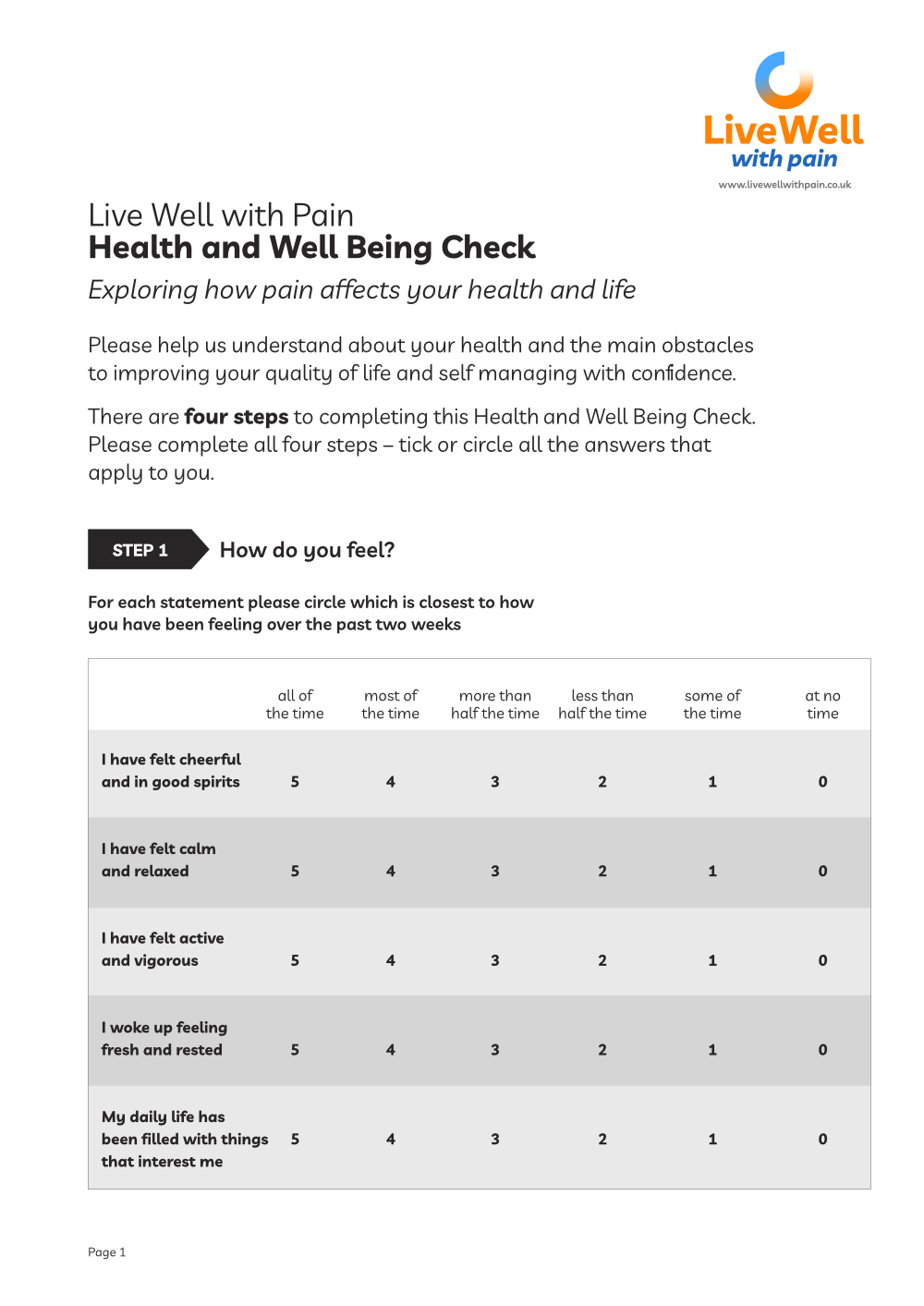
STEP 1 – How do you feel?
This first step for the person to complete uses the WHO Mental Well Being scale which asks about five emotional areas which may have affected the patient in the previous two weeks.
The scale has been validated for people with chronic pain and many other health conditions. It has been translated into more than 30 languages and is used across the globe.
The WHO Mental Well Being scale is a one-hundred-point scale. To obtain a score out of 100, simply add up the score from the five questions and multiply by four.
You can have a look at the WHO Mental Well Being Scale here.
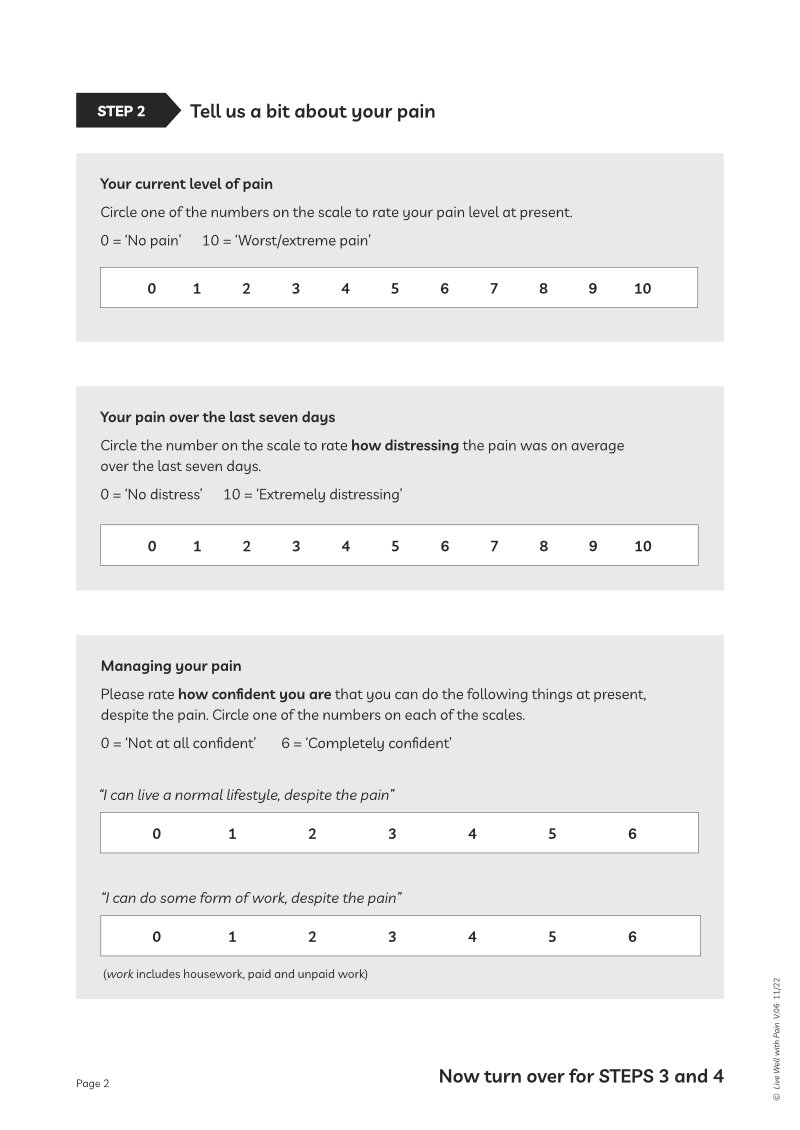
STEP 2 – Tell us a bit about your pain
This step is about aspects of pain and the self-confidence to manage it.
It covers pain intensity and pain distress levels. The higher the score the worse the pain intensity or pain distress level.
The higher the level of distress the greater the current and past emotional content is important to consider. It helps the person understand there is an emotional / trauma component of pain for a multitude of reasons.
Pain distress of 7 or more indicates emotional wellbeing is significantly affected and addressing psychological care is indicated.
Confidence to self-manage (Pain Self Efficacy Questionnaire – PSEQ 2). These two validated questions help identify the level of confidence the person has to self-manage.
Score is out of maximum of 12.
The higher the score, the greater the level of confidence to self-manage.
Scores less than four indicate a severe impact of pain on confidence. Consider multidisciplinary specialist pain management practitioner assessment.
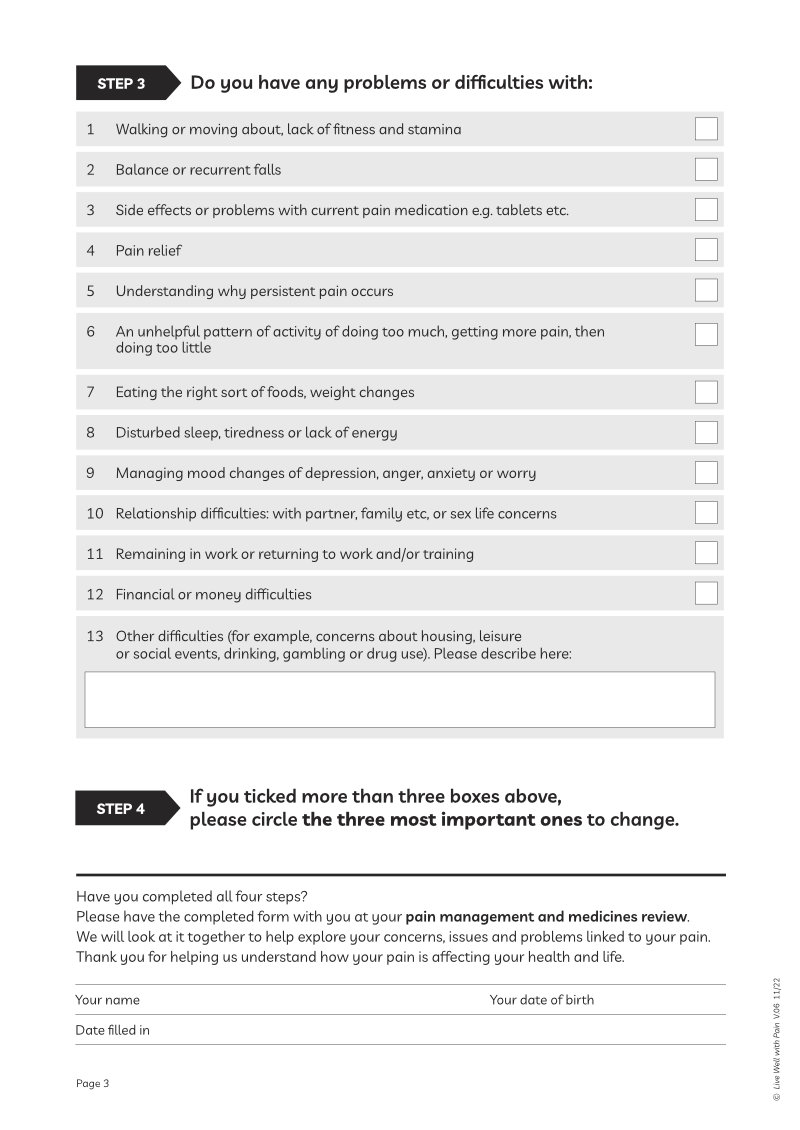
STEP 3 – Do you have any problems or difficulties with . . .
This is the health needs assessment component of the Health and Wellbeing Check. It helps the individual to see the wider picture of the impact of pain on their health across 13 areas of need at the current time:
-
Walking or moving about, lack of fitness and stamina
-
Balance or recurrent falls
-
Side effects or problems with current pain medication e.g. tablets etc.
-
Pain relief
-
Understanding why persistent pain occurs
-
An unhelpful pattern of activity of doing too much, getting more pain, then doing too little
-
Eating the right sort of foods, weight changes
-
Disturbed sleep, tiredness or lack of energy
-
Managing mood changes of depression, anger, anxiety or worry
-
Relationship difficulties: with partner, family etc, or sex life concerns
-
Remaining in work or returning to work and/or training
-
Financial or money difficulties
-
Other difficulties (for example, concerns about housing, leisure or social events, drinking, gambling or drug use).
The more areas ticked, the greater the impact on all aspects of health: physical, emotional and social role function.
This is a guide to the severity of the impact of pain on health and decision making about multidisciplinary specialist care.
STEP 4 – The three most important things to change now
This final step guides the person to prioritise their current needs and therefore can quickly form a focus for a consultation or review. It makes best use of brief consultation time.
Each area is linked to resources within Live Well with Pain’s Ten Footsteps programme, so patients can be encouraged to exlore these resources.
Record your CPD
Live Well with Pain has partnered with Fourteen Fish, a UK company specialising in medical appraisal tools, to create a CPD recorder that is fully integrated into the site.